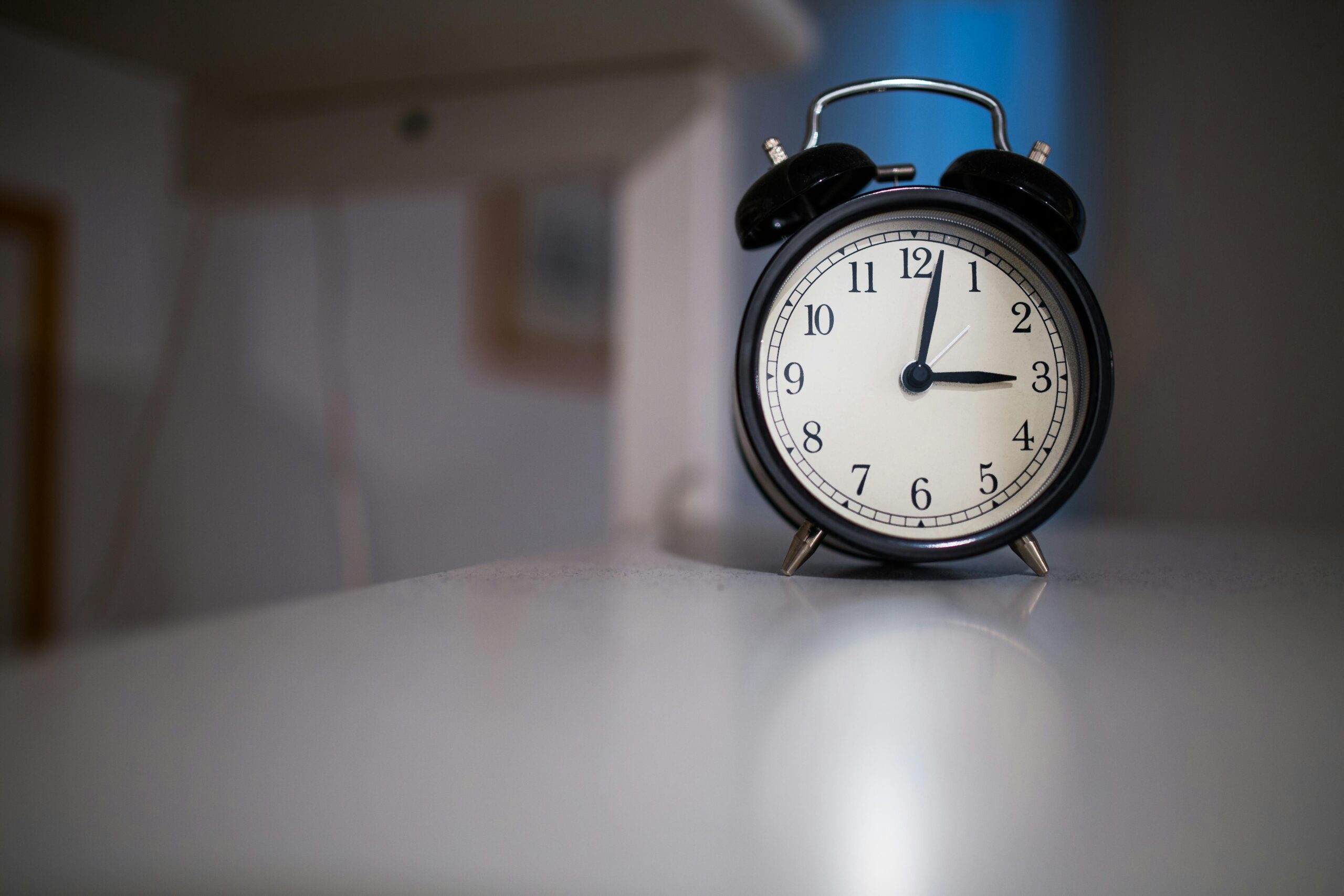
It happens like clockwork.
You fall asleep fine. Then somewhere between 2am and 4am, your eyes snap open — and your mind immediately starts racing.
“Why do i wake up at 3am every night?”, you wonder.
You lie there, watching the minutes tick by. An hour passes. Sometimes two. By the time you finally drift back off, your alarm is twenty minutes away.
If this is you, you are not alone. Waking at 3am is one of the most common sleep complaints in people over 40 — and it almost always has a specific, identifiable cause.
Here is what is actually waking you up — and how to stop it.
Why does 3am waking happen so consistently?
The timing is not random.
Sleep occurs in 90-minute cycles, moving between light sleep, deep sleep and REM sleep. By approximately 3am, most adults have completed the majority of their deep sleep and are cycling through lighter REM stages.
This transition point is when the brain is most vulnerable to waking — especially if something biological is disrupting the process.
The question is not why you are waking at 3am. The question is what is waking you.
The six most common reasons you wake at 3am after 40
1. Blood sugar crash (the most overlooked cause)
This is the single most common — and most overlooked — cause of 3am waking in people over 40.
Here is what happens: when blood sugar drops during the night, your body releases cortisol and adrenaline to raise it back up. These are stress hormones. Their job is to wake you up — and they do exactly that.
Signs this is your issue:
- You wake feeling anxious or with a racing heart
- You feel hungry or slightly nauseous when you wake
- You had a high-carbohydrate dinner or drank alcohol before bed
- You wake feeling hot or sweaty
The fix: Eat a small protein-based snack before bed — a tablespoon of almond butter, a small handful of nuts, or a piece of cheese. This stabilises blood sugar through the night and prevents the cortisol spike that wakes you up.
Many people notice a significant improvement within the first three nights of doing this.
2. Cortisol spiking too early
In a healthy circadian rhythm, cortisol naturally begins rising around 4–5am — this is what prepares your body to wake up and face the day.
After 40, particularly under chronic stress or adrenal dysregulation, this cortisol rise can happen earlier than it should. For some people it starts at 2–3am — waking them up hours before their alarm with a sense of alertness, anxiety or racing thoughts that makes returning to sleep almost impossible.
Signs this is your issue:
- You wake feeling wide awake and mentally alert
- Your mind immediately starts running through to-do lists or worries
- You feel anxious or have a sense of dread for no clear reason
- You have been under prolonged stress or experienced burnout
The fix: Address evening cortisol levels by:
- Avoiding high-intensity exercise after 6pm
- Cutting alcohol entirely — it raises cortisol as it metabolises during the night
- Doing 5–10 minutes of slow breathing before bed to activate the parasympathetic nervous system
- Considering ashwagandha supplementation — 300mg taken in the evening has clinical evidence for reducing cortisol
If you suspect stress is the root cause read: Is Stress Keeping you up at night?
3. Perimenopause and hormonal fluctuations
For women in their 40s, fluctuating oestrogen and progesterone are a primary driver of night waking — and one of the most underdiagnosed causes of 3am waking specifically.
Progesterone has a natural sedative effect — it binds to GABA receptors in the brain, promoting calm and deep sleep. As progesterone declines during perimenopause, the ability to stay in deep sleep diminishes significantly.
Oestrogen fluctuations also trigger night sweats — sometimes mild enough that you do not fully notice them, but disruptive enough to pull you out of deep sleep and into wakefulness at a consistent time each night.
Signs this is your issue:
- You are a woman in your 40s
- Your periods have become irregular or heavier
- You sometimes wake feeling warm or damp
- Your sleep has deteriorated without any obvious lifestyle reason
The fix: Keep your bedroom cool (16–18°C / 60–65°F), use moisture-wicking bedding, take magnesium glycinate before bed, and speak to your doctor about whether HRT is appropriate for you.
For a full breakdown: How Perimenopause Wrecks Your Sleep (And What Actually Helps)
4. Alcohol metabolising during the night
Many people have a drink in the evening to “wind down” — and it works initially. Alcohol does help you fall asleep faster.
But approximately 2–3 hours after drinking, your body finishes metabolising the alcohol and produces a stimulant rebound effect. REM sleep is suppressed. Body temperature rises. Cortisol spikes. And you wake up — typically right around 3am — feeling alert, restless or anxious.
This is not a coincidence. It is a direct pharmacological effect of alcohol metabolism.
Signs this is your issue:
- You consistently wake 2–3 hours after going to bed
- You had wine, beer or spirits in the evening
- You fall asleep easily but cannot stay asleep
The fix: Remove alcohol on weeknights for two weeks and observe whether the 3am waking stops. For most people it does — often immediately.
For more on how food and drink affect sleep: 7 Foods That Wreck Your Sleep After 40
5. Sleep apnoea
Sleep apnoea — where breathing repeatedly stops and starts during sleep — is significantly more common after 40, particularly in men and in post-menopausal women.
It frequently goes undiagnosed because the person waking does not realise they have stopped breathing. They simply notice they keep waking at similar times, feel exhausted regardless of how long they sleep, and may snore — which a partner notices before they do.
Signs this is your issue:
- You snore loudly or have been told you stop breathing during sleep
- You wake with a dry mouth, sore throat or headache
- You feel exhausted during the day despite adequate time in bed
- You wake gasping or with a sudden jolt
The fix: See your doctor and request a referral for a sleep study. Sleep apnoea is highly treatable — and treating it can transform your energy levels, cognitive function and cardiovascular health completely.
This is not one to manage with lifestyle changes alone. If the signs above resonate, please see a doctor.
6. Anxiety and racing thoughts
The 3am wake-up and the anxious mind frequently go together. Once you are awake in the quiet of the night, worries are amplified — and the frustration of not sleeping adds another layer of stress that makes returning to sleep even harder.
This creates a self-reinforcing cycle:
- Anxiety wakes you up
- Waking at 3am increases anxiety
- Increased anxiety prevents you from returning to sleep
- Chronic sleep deprivation worsens anxiety the following day
Signs this is your issue:
- Your mind immediately fills with worries, regrets or planning when you wake
- You feel a sense of dread or unease without a specific trigger
- You have been experiencing high stress, life changes or uncertainty
The fix: Do not lie in bed trying to force sleep. Get up, go to another room, and do something genuinely calm — slow breathing, gentle stretching, or reading something light and unrelated to work or worry. Return to bed only when you feel genuinely sleepy again.
The 3am protocol — what to do tonight
If you wake at 3am, do exactly this:
Step 1 — Do not look at the clock Checking the time increases cortisol and makes falling back to sleep significantly harder. Turn your clock face away and keep your phone in another room.
Step 2 — Do not reach for your phone Blue light suppresses melatonin. Mental stimulation from email, social media or news will keep you awake for hours. There is nothing on your phone that cannot wait until morning.
Step 3 — Do slow breathing Inhale through your nose for 4 counts. Hold for 4 counts. Exhale slowly through your mouth for 6–8 counts. Repeat for 5 minutes. This activates the parasympathetic nervous system and reduces cortisol.
Step 4 — If you cannot sleep after 20 minutes, get up Lying in bed awake trains your brain to associate your bed with wakefulness — making insomnia worse over time. Get up, sit in dim light, do something calm, and return to bed only when you feel sleepy.
Step 5 — The next day, identify your cause Go through the six causes above and honestly assess which one is most likely. That is where to focus your energy.
Frequently asked questions
Is waking at 3am a sign of something serious? In most cases, no. The causes above are all addressable lifestyle and physiological factors. However, if you also snore loudly, wake gasping, or feel extremely exhausted during the day, see your doctor to rule out sleep apnoea.
How long does it take to stop waking at 3am? This depends on the cause. Blood sugar fixes often work within 3–5 nights. Cortisol dysregulation may take 4–6 weeks of consistent lifestyle changes. Hormonal causes may require medical intervention.
Should I take melatonin for 3am waking? No — melatonin supports sleep onset (falling asleep) but does not address the causes of night waking. It is not effective for 3am waking in most cases.
Can stress alone cause 3am waking? Yes. Chronic stress is one of the most powerful disruptors of sleep architecture. The cortisol and adrenaline released during stress are biologically designed to interrupt sleep. Addressing stress is not optional if you want to sleep through the night.
Bottom line
Waking at 3am is not bad luck. It is not simply getting older. It is a signal from your body — and signals have causes.
The most common causes in people over 40 are blood sugar instability, early cortisol spiking, hormonal changes, alcohol metabolism, sleep apnoea and anxiety.
Start with the simplest fix tonight: eat a small protein snack before bed and remove alcohol for two weeks. For many people, that alone stops the 3am wake-up completely.
If it does not, work through the remaining causes systematically. The answer is in there.
What to read next
Now that you understand night waking, the next step is understanding the bigger picture of why midlife fatigue runs so deep:
Why You’re Always Tired in Your 40s — It’s Not Just Age
Or if you want to address your sleep schedule more broadly: How to Fix Your Sleep Schedule in 3 Days
This article is for informational purposes only and does not constitute medical advice. If you are experiencing persistent sleep disruption, please consult your doctor.