

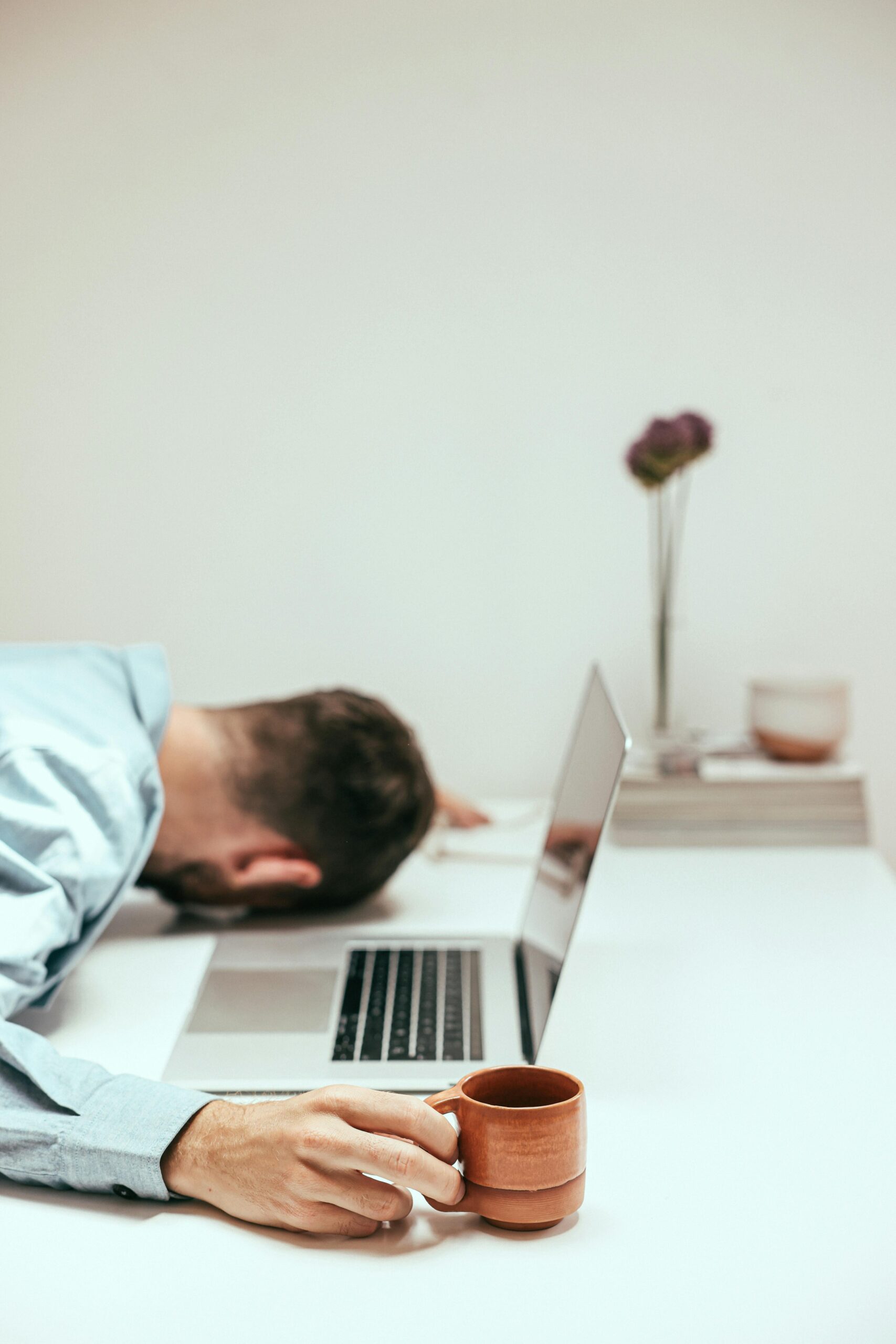
You are exhausted. But you cannot sleep.
You lie in bed with your mind racing — running through tomorrow’s to-do list, replaying conversations, worrying about things you cannot control. When you finally drift off, you wake at 3am, heart pounding, unable to get back to sleep.
Is stress keeping you awake at night?
By morning you are running on empty — which makes everything more stressful — which makes the next night’s sleep worse.
This is the stress-sleep cycle. And without understanding what is driving it, it is almost impossible to break.
Here is the science behind what stress does to your sleep — and more importantly, how to get out of the cycle.
Why chronic stress disrupts sleep
Stress is not a new problem. But chronic, sustained stress — the kind that accumulates over months and years — has a measurably different effect on sleep than acute short-term stress.
When the stress response system — the hypothalamic-pituitary-adrenal (HPA) axis — is chronically activated, it loses its natural rhythm. Cortisol stops following its healthy daily pattern and instead remains elevated at times when it should be low — particularly in the evening and overnight, when sleep depends on it being at its lowest point.
Research published in Psychoneuroendocrinology found that individuals with chronic stress show significantly flattened cortisol curves — with higher evening cortisol and lower morning cortisol than healthy controls.² This pattern is directly associated with poor sleep quality, difficulty falling asleep and frequent night waking.
Under chronic stress, several factors make sleep recovery increasingly difficult:
- Declining hormonal resilience — both estrogen in women and testosterone in men moderate cortisol activity. As these hormones shift, the same stressor can produce a larger and longer cortisol response than it previously would have.¹
- Accumulated stress load — prolonged career pressure, relationship demands, financial responsibilities and health concerns compound over time, gradually wearing down the stress response system
- Slower recovery — with prolonged chronic stress, the HPA axis takes longer to return to baseline after a stress response, meaning cortisol stays elevated longer than it should²
The cortisol-sleep connection
To understand how stress destroys sleep, you first need to understand cortisol.
Cortisol is your primary stress hormone — produced by the adrenal glands in response to physical or psychological stress. Its job is to mobilize energy, sharpen focus and prepare your body for action.
In a healthy circadian rhythm, cortisol follows a predictable pattern:
- Peaks in the morning (around 6–8am) to help you wake up and face the day
- Gradually declines through the afternoon
- Reaches its lowest point in the early hours of the night to allow deep, restorative sleep
- Begins rising again around 4–5am to prepare you for waking
Sleep and cortisol are designed to work in opposition — when one is high, the other is low. This is not coincidental. It is a fundamental biological design.
When chronic stress keeps cortisol elevated through the evening and night, this design breaks down completely. Research published in Psychoneuroendocrinology confirmed that individuals with chronic stress consistently show elevated evening cortisol — directly associated with poor sleep quality, difficulty falling asleep and frequent night waking.²
How chronic stress damages sleep architecture
Sleep is not a single uniform state. It is a carefully orchestrated sequence of stages — each serving a specific recovery function.
A normal night of sleep cycles through:
- Light sleep (N1 and N2) — the transition into sleep and light restorative sleep
- Deep sleep (N3 / slow-wave sleep) — physical repair, immune function, memory consolidation
- REM sleep — emotional processing, creativity, cognitive restoration
Chronic stress disrupts this architecture in measurable, specific ways.
Deep sleep suppression
Elevated cortisol at night directly suppresses slow-wave (deep) sleep. A landmark study by Leproult et al. (1997) published in Sleep found that even a single night of elevated evening cortisol significantly reduced the amount of deep sleep in healthy adults.³
Deep sleep is when your body:
- Repairs tissue and muscle
- Clears metabolic waste from the brain via the glymphatic system
- Consolidates memories and learning
- Regulates growth hormone production
When deep sleep is consistently suppressed by chronic stress, you can spend 8 hours in bed and wake up feeling as though you barely slept at all. This is not imagination — it is a direct physiological consequence of elevated cortisol.
REM sleep fragmentation
Stress also fragments REM sleep — the stage most associated with emotional regulation and cognitive restoration.
Research by Kessler et al. (2010) published in the Archives of General Psychiatry found that individuals under chronic psychological stress showed significantly reduced REM duration and increased REM fragmentation — leading to impaired emotional processing and increased anxiety the following day.⁴
This creates a particularly damaging feedback loop: stress fragments REM sleep → poor REM sleep worsens emotional regulation → reduced emotional regulation makes stress feel more overwhelming → which further disrupts the following night’s sleep.
Increased sleep latency
Elevated cortisol in the evening delays sleep onset — the time it takes to fall asleep after getting into bed.
A study published in Psychoneuroendocrinology found that salivary cortisol measured one hour before bed was a significant predictor of sleep onset latency — meaning higher evening cortisol consistently predicted longer time to fall asleep.⁵
If you lie in bed for 30–60 minutes unable to switch your mind off, elevated evening cortisol is the most likely physiological cause.
Stress hormones and 3am waking
The 3am wake-up is one of the most common complaints among people under chronic stress — and it has a specific biological explanation.
By approximately 3am, most adults have completed the majority of their deep sleep. The brain transitions into lighter REM sleep — a more vulnerable stage where internal disruption more easily causes full waking.
In people under chronic stress, two mechanisms drive 3am waking specifically:
1. Early cortisol surge In healthy individuals, cortisol begins rising around 4–5am. In people with HPA axis dysregulation, this rise can occur 1–2 hours earlier — at 2–3am — waking them with a sense of alertness, anxiety or racing thoughts.
Research by Clow et al. (2004) published in Neuroscience and Biobehavioral Reviews documented this early cortisol awakening response in individuals with chronic stress — finding that it was significantly associated with night waking, early morning waking and non-restorative sleep.⁶
2. Adrenaline response to blood sugar drops Chronic stress impairs insulin sensitivity — meaning blood sugar becomes less stable overnight. When blood sugar drops during the night, the body releases adrenaline and cortisol to raise it back up. This stress hormone release wakes you at a consistent time — typically 2–4am — often with a racing heart or sense of anxiety.
Biochemist Jessie Inchauspé (the Glucose Goddess) has highlighted how blood sugar instability and the stress response are deeply interconnected — stabilizing blood sugar through simple meal sequencing directly reduces the nocturnal cortisol spikes that cause night waking. More at glucosegoddess.com
For a complete guide to 3am waking: Why You Wake Up at 3am Every Night
The stress-fatigue-sleep cycle
This is the mechanism that traps many people in years of poor sleep and chronic exhaustion — and understanding it is the key to breaking out.
[Insert stress-fatigue-sleep cycle diagram here]
Here is how the cycle works:
Stage 1 — Chronic stress elevates cortisol Work pressure, relationship demands, financial stress and health anxiety keep the HPA axis in a state of low-grade chronic activation. Cortisol remains elevated through the evening when it should be declining.
Stage 2 — Elevated cortisol destroys sleep quality Deep sleep is suppressed. REM sleep is fragmented. Sleep onset is delayed. You spend 7–8 hours in bed but cycle through predominantly light sleep — emerging exhausted rather than restored.
Stage 3 — Poor sleep amplifies the stress response Sleep deprivation directly increases cortisol levels the following day. Research by Leproult et al. (1997) found that even partial sleep restriction resulted in significantly elevated cortisol levels the following evening — perpetuating the cycle.³
Sleep deprivation also impairs the prefrontal cortex — the part of the brain responsible for rational thinking and emotional regulation. This means stressors feel more threatening, emotional reactions are more intense, and the ability to put problems in perspective is reduced.
Stage 4 — Fatigue increases stress load Exhaustion reduces productivity, increases irritability, impairs decision-making and lowers resilience. The same workload that felt manageable when well-rested feels overwhelming when chronically sleep-deprived — adding further stress to an already strained system.
Stage 5 — The cycle continues More stress → worse sleep → more fatigue → less resilience → more stress.
Without deliberate intervention, this cycle is self-perpetuating. Many people live inside it for years — assuming exhaustion is simply the reality of modern life.
It is not.
How to break the stress-sleep cycle
Breaking the cycle requires intervening at multiple points simultaneously — not just adding relaxation techniques on top of an unchanged stressful life.
1. Address evening cortisol — the most urgent priority
Everything else in this section is more effective once evening cortisol is brought under control.
Slow breathing before bed Diaphragmatic breathing activates the parasympathetic nervous system — directly counteracting the cortisol-driven sympathetic activation that keeps you awake. A study published in Frontiers in Human Neuroscience found that slow breathing at 5–6 breaths per minute significantly reduced cortisol and increased heart rate variability — a marker of parasympathetic activity.⁷
Practice: inhale for 4 counts, hold for 2, exhale for 6–8 counts. Do this for 10 minutes before bed.
Cut alcohol on weeknights Alcohol is metabolized into acetaldehyde — a stimulant compound that triggers a cortisol spike 2–3 hours after consumption. This is the primary mechanism behind 3am waking in regular drinkers. Even one drink measurably elevates cortisol during the second half of the night.⁸
Avoid high-intensity exercise after 6pm Exercise raises cortisol — useful in the morning but counterproductive at night. High-intensity training within 3–4 hours of bed delays sleep onset and reduces deep sleep. Gentle movement such as walking, yoga or stretching is fine in the evening and actively supports cortisol reduction.
Dim your lights after 8pm Bright light suppresses melatonin and maintains cortisol at levels that delay sleep. Switching to warm, dim lighting in the evening sends a clear biological signal that the day is ending.
2. Create a genuine stress boundary between day and night
One of the most consistent findings in sleep research is that people who mentally carry their stress into the bedroom have significantly worse sleep than those who create a clear transition between their active day and their evening.
A 10–15 minute wind-down ritual is sufficient:
- Write down tomorrow’s priorities before leaving your workspace — this offloads mental to-do lists from working memory
- Change out of work clothes — a physical signal to your nervous system that the working day is over
- Do something genuinely absorbing and non-stressful for 30–60 minutes before bed
Research by Berset et al. (2011) published in the Journal of Occupational Health Psychology found that psychological detachment from work in the evening was one of the strongest predictors of sleep quality and next-day energy — more predictive than total sleep duration.⁹
3. Stabilize blood sugar to prevent nocturnal cortisol spikes
Blood sugar instability during the night triggers cortisol and adrenaline release that causes waking. Stabilizing blood sugar is therefore a direct strategy for reducing nocturnal stress hormone activity.
Key changes:
- Apply the Glucose Goddess meal sequencing principle at dinner — vegetables and protein before starches
- Eat protein with every meal to slow glucose absorption
- Take a 10-minute walk after dinner — shown to significantly reduce post-meal glucose spikes¹⁰
- If you wake at 3am feeling anxious or hungry, try a small protein-based snack before bed to stabilize blood sugar through the night
4. Support your stress response with targeted supplementation
When chronic stress has been running for months or years, targeted supplementation can meaningfully support recovery alongside lifestyle changes. The three supplements below have the strongest clinical evidence for stress and sleep support — with corrected dosages based on the research.
Ashwagandha (KSM-66 extract)
Of all the adaptogens studied for stress and sleep, ashwagandha has the most robust clinical evidence.
A randomized, double-blind, placebo-controlled trial by Chandrasekhar et al. (2012) — the most cited human trial on ashwagandha and cortisol — found a 27.9% reduction in serum cortisol in the ashwagandha group versus 7.9% in the placebo group over 60 days.¹¹ The study used 300mg taken twice daily — 600mg total per day.
A separate dose-response trial comparing 250mg versus 600mg daily confirmed that while both doses reduced cortisol significantly, 600mg produced a meaningfully greater effect.¹¹ᵃ
A 2021 systematic review further confirmed that benefits were consistently greater at 500–600mg per day than at lower doses.¹¹ᵇ
What the evidence supports:
- Significant reduction in serum cortisol
- Reduced perceived stress and anxiety scores
- Improved sleep quality in people with insomnia
Corrected dose: 600mg daily, taken as two doses of 300mg — one in the morning and one in the evening. Starting at 300mg once daily is reasonable and can be increased after 2–4 weeks if needed.
What to look for on the label: KSM-66 or Sensoril — these are the standardized, clinically studied extracts. Generic “ashwagandha root powder” is not equivalent.
Timeline: Most studies ran for 60 days. Expect noticeable effects on perceived stress within 2–4 weeks, with fuller cortisol reduction benefits appearing by week 6–8.
Magnesium Glycinate
Magnesium is the most foundational supplement for sleep and stress support — and also the most commonly misdosed because of a labeling issue that most people are unaware of.
A 2024 randomized placebo-controlled trial using magnesium bisglycinate found statistically significant improvements in insomnia severity scores after 28 days of supplementation — with most improvements occurring within the first two weeks and sustained thereafter.¹²
A 2024 systematic review examining supplemental magnesium for both sleep and anxiety found that the majority of included studies reported improvements in both outcomes, particularly in individuals with low magnesium status at baseline.¹²ᵃ
Important label clarification: Most magnesium supplement labels show the total compound weight — not the elemental magnesium content. These are very different numbers.
For example, a capsule labelled “500mg magnesium glycinate” may contain only 50–70mg of elemental magnesium — the actual active mineral. Clinical trials showing sleep and anxiety benefits used 200–400mg of elemental magnesium daily, not total compound weight.
When reading your label, look specifically for the elemental magnesium figure — usually shown in brackets or as a sub-entry beneath the total compound weight.
What the evidence supports:
- Modest but statistically significant improvements in sleep quality and insomnia severity
- Reduced self-reported anxiety in individuals with low magnesium status
- GABA receptor activation — partially compensating for reduced progesterone-driven calming activity under chronic stress
Corrected dose: 200–400mg of elemental magnesium as glycinate, taken 30–60 minutes before bed. Start at 200mg and increase gradually — taking too much too soon can cause loose stools, which is the body’s signal that you have exceeded your current absorption threshold.
Timeline: The 2024 bisglycinate trial found improvements within 14 days. Most people notice meaningful changes in sleep quality within 2–4 weeks of consistent use.
For a complete guide to magnesium forms and dosing: The Best Magnesium Supplement for Sleep
L-theanine
L-theanine is an amino acid found naturally in green tea that promotes alpha brain wave activity — associated with a state of calm alertness without sedation.
The evidence for L-theanine on sleep and stress is positive but requires some nuance — specifically around the cortisol claim.
A randomized controlled trial by Hidese et al. (2019) using 200mg daily for four weeks found significant improvements in sleep latency, sleep disturbance and daytime dysfunction compared to placebo.¹³ Sleep quality scores improved meaningfully — though cortisol levels did not change significantly over the four-week period.
For acute stress, the cortisol picture is stronger. A crossover trial found a significantly greater reduction in salivary cortisol one hour after a single dose of L-theanine during a stress-inducing task compared to placebo¹³ᵃ — suggesting L-theanine is particularly useful for managing acute stress responses rather than chronically elevated cortisol.
What the evidence supports:
- Improved sleep latency — falling asleep faster
- Reduced sleep disturbance and daytime dysfunction
- Reduced acute cortisol response during stressful situations
- Improved perceived stress scores over 28 days of supplementation
What it does not do: The evidence does not currently support L-theanine as a significant reducer of chronically elevated cortisol over time. For that, ashwagandha has a stronger evidence base. L-theanine is better positioned as a complement — supporting sleep onset and acute stress management — rather than a primary cortisol intervention.
Dose: 200mg daily, taken in the evening before bed — the most consistently studied dose across trials. The FDA has granted L-theanine Generally Recognized As Safe (GRAS) status at up to 250mg per serving.
Timeline: Acute effects on stress are noticeable within 1–3 hours of a single dose. Sleep quality improvements in clinical trials were observed over 4 weeks of consistent daily use.
5. Address the underlying stress load
No supplement, sleep technique or breathing practice will fully compensate for a chronic stress load that genuinely exceeds your recovery capacity.
Real recovery requires honestly assessing and reducing your stress load:
- Identifying and addressing the primary sources of chronic stress — work, relationships, finances, health
- Building genuine recovery time into your week — not just sleep, but restorative, undemanding activity
- Saying no to commitments that are not essential during recovery
- Seeking professional support if anxiety or stress is severe — cognitive behavioral therapy (CBT) has the strongest evidence base of any intervention for stress-related insomnia¹⁴
Supplement comparison at a glance
| Supplement | Primary benefit | Corrected dose | Timeline |
|---|---|---|---|
| Ashwagandha KSM-66 | Cortisol reduction, stress resilience | 600mg/day (300mg twice daily) | 6–8 weeks |
| Magnesium glycinate | Sleep quality, GABA support | 200–400mg elemental magnesium | 2–4 weeks |
| L-theanine | Sleep onset, acute stress | 200mg before bed | 1–4 weeks |
Note: These supplements are complementary, not interchangeable. Ashwagandha addresses chronic cortisol. Magnesium supports sleep architecture. L-theanine supports sleep onset and acute stress. Many people use all three together.
Frequently asked questions
Can stress alone cause insomnia without any other medical cause? Yes. Chronic psychological stress is one of the most powerful causes of insomnia — it elevates cortisol, fragments sleep architecture and creates the hyperarousal state that prevents both falling and staying asleep. Addressing stress directly is the most effective long-term treatment for stress-related insomnia.
How long does it take to break the stress-sleep cycle? Most people notice meaningful improvement in sleep quality within 2–4 weeks of consistently reducing evening cortisol. Full recovery from adrenal dysregulation typically takes 3–6 months depending on how long the pattern has been running.
Is stress-related insomnia the same as clinical insomnia? Stress-related sleep disruption can develop into clinical insomnia if it persists for more than 3 months. If sleep problems are significantly affecting your daily functioning, speak to your doctor. Cognitive behavioral therapy for insomnia (CBT-I) is the recommended first-line treatment.
Should I take all three supplements together? They work through different mechanisms and are generally safe to combine. However start one at a time — introducing them separately over 2–3 week intervals lets you identify what is helping. Begin with magnesium glycinate as it addresses the most foundational deficiency, then add ashwagandha, then L-theanine if needed.
Does melatonin help stress-related sleep disruption? Melatonin supports sleep onset but does not address the underlying cortisol dysregulation driving stress-related insomnia. It may help with falling asleep but is unlikely to prevent 3am waking caused by cortisol or blood sugar spikes. The supplements above are better suited to stress-related sleep disruption specifically.
What is the single most effective thing I can do tonight? Cut alcohol if you are drinking regularly and do 10 minutes of slow breathing before bed. These two changes address evening cortisol directly and produce measurable improvements in sleep quality within days for most people.
Bottom line
Chronic stress is one of the most powerful disruptors of sleep — and most people do not realize the extent to which it is affecting their nights.
The mechanism is clear: elevated cortisol suppresses deep sleep, fragments REM sleep, delays sleep onset and triggers 3am waking. Poor sleep then amplifies the stress response — completing the cycle.
Breaking it requires addressing multiple points simultaneously: reducing evening cortisol, creating a genuine stress boundary before bed, stabilizing blood sugar, and supporting the stress response with evidence-based supplementation at the correct doses.
If you choose to supplement, the evidence points to ashwagandha KSM-66 at 600mg daily for cortisol reduction, magnesium glycinate at 200–400mg elemental magnesium for sleep quality, and L-theanine at 200mg for sleep onset and acute stress management.
None of this is complicated. But it does require consistency — and it starts tonight.
What to read next
If you are waking at 3am specifically: Why You Wake Up at 3am Every Night — And How to Stop It
If you want to understand the full picture of adrenal recovery: What Is Adrenal Fatigue — And Can You Actually Recover From It?
If you want to fix your sleep schedule first: How to Fix Your Sleep Schedule in 3 Days
Sources
- Kajantie, E., & Phillips, D.I. (2006). The effects of sex and hormonal status on the physiological response to acute psychosocial stress. Psychoneuroendocrinology, 31(2), 151–178. pubmed.ncbi.nlm.nih.gov/16139959
- Fries, E., et al. (2005). A new view on hypocortisolism. Psychoneuroendocrinology, 30(10), 1010–1016. pubmed.ncbi.nlm.nih.gov/15589058
- Leproult, R., et al. (1997). Sleep loss results in an elevation of cortisol levels the next evening. Sleep, 20(10), 865–870. pubmed.ncbi.nlm.nih.gov/9415946
- Kessler, R.C., et al. (2010). Insomnia and the performance of US workers. Archives of General Psychiatry, 68(10), 1058. pubmed.ncbi.nlm.nih.gov/20921188
- Backhaus, J., et al. (2004). Sleep disturbances are correlated with decreased morning awakening salivary cortisol. Psychoneuroendocrinology, 29(9), 1184–1191. pubmed.ncbi.nlm.nih.gov/15219642
- Clow, A., et al. (2004). The awakening cortisol response: methodological issues and significance. Stress, 7(1), 29–37. pubmed.ncbi.nlm.nih.gov/15204030
- Zaccaro, A., et al. (2018). How breath-control can change your life: a systematic review on psychophysiological correlates of slow breathing. Frontiers in Human Neuroscience, 12, 353. pubmed.ncbi.nlm.nih.gov/30245619
- Roehrs, T., & Roth, T. (2001). Sleep, sleepiness, and alcohol use. Alcohol Research & Health, 25(2), 101–109. pubmed.ncbi.nlm.nih.gov/11584549
- Berset, M., et al. (2011). Work-related stress and the importance of detachment from work during leisure time. Journal of Occupational Health Psychology, 16(2), 162–180. pubmed.ncbi.nlm.nih.gov/21534673
- DiPietro, L., et al. (2013). Three 15-min bouts of moderate postmeal walking significantly improves 24-h glycemic control. Diabetes Care, 36(10), 3262–3268. pubmed.ncbi.nlm.nih.gov/23775700
- Chandrasekhar, K., et al. (2012). A prospective, randomized double-blind, placebo-controlled study of safety and efficacy of a high-concentration full-spectrum extract of ashwagandha root in reducing stress and anxiety in adults. Indian Journal of Psychological Medicine, 34(3), 255–262. pmc.ncbi.nlm.nih.gov/articles/PMC3573577
11a. Pratte, M.A., et al. (2014). An alternative treatment for anxiety: a systematic review of human trial results reported for the Ayurvedic herb ashwagandha. Journal of Alternative and Complementary Medicine. pubmed.ncbi.nlm.nih.gov/25405876
11b. National Institutes of Health Office of Dietary Supplements. (2023). Ashwagandha: Health Professional Fact Sheet. ods.od.nih.gov/factsheets/Ashwagandha-HealthProfessional
- Schuster, J., et al. (2024). Magnesium bisglycinate supplementation in healthy adults reporting poor sleep: a randomized, placebo-controlled trial. Nature and Science of Sleep. pmc.ncbi.nlm.nih.gov/articles/PMC12412596
12a. Rawji, A., et al. (2024). Examining the effects of supplemental magnesium on self-reported anxiety and sleep quality: a systematic review. Cureus, 16(4). pmc.ncbi.nlm.nih.gov/articles/PMC11136869
- Hidese, S., et al. (2019). Effects of L-theanine administration on stress-related symptoms and cognitive functions in healthy adults: a randomized controlled trial. Nutrients, 11(10), 2362. pmc.ncbi.nlm.nih.gov/articles/PMC6836118
13a. Kimura, K., et al. (2007). L-theanine reduces psychological and physiological stress responses. Biological Psychology, 74(1), 39–45. pubmed.ncbi.nlm.nih.gov/16930802
- Trauer, J.M., et al. (2015). Cognitive behavioral therapy for chronic insomnia: a systematic review and meta-analysis. Annals of Internal Medicine, 163(3), 191–204. pubmed.ncbi.nlm.nih.gov/26054060
This article is for informational purposes only and does not constitute medical advice. Always consult your doctor before starting any new supplement, particularly if you take medication or have an underlying health condition. Supplement dosages referenced in this article are based on clinical trial protocols and may not be appropriate for everyone.

Pingback: Why You Wake Up at 3am Every Night (And How to Stop It) - Energy Reset Lab